
Subscribe to the MAY CAUSE SIDE EFFECTS substack, a newsletter devoted to antidepressant withdrawal education and recovery.

menu

As I sit here on this gloomy spring morning, the tentacles of a migraine still latched onto the left side of my head, I am reminded of the phrase, “Do as much as necessary and as little as possible.”

wooden doll building wooden wall and text overlay

I first heard this phrased used around physical training. Think of an Olympian, for example, who has a finely tuned workout schedule designed to create gold-medal worthy results. She can’t back off and do less, otherwise, she risks her performance. She also shouldn’t do more, even if she’s capable of it, because doing more interferes with the rest and recovery necessary to perform at a high level. She doing both as much as necessary and as little as possible to reach her goals.

The idea is that doing more for the sake of doing more isn’t beneficial. That extra energy has to go somewhere, and if you’re not careful, that untamed energy leads to overuse and destruction.

Case in point: a Sunday night migraine that bleeds over to Monday because you broke your “no work on Saturday, under any circumstances, because you need to force yourself to rest so you don’t get sick” rule.

“Do as much as necessary and as little as possible” is tricky, though. Not only does it go against the “hustle harder” mantra that has so dominated our culture over the last decade, but it also gives those without much…shall we say, gumption, a route to laziness.

Take parenting, for example. I know one couple who, in all likelihood, will push their kid to take the SATs twice (and the ACTs twice, for good measure), even if the first go around yields scores strong enough to get the kid into her school of choice. I also know another couple whose neuro-typical seven year old can’t read or write his own name, but because they feed the kid and plop him in front of Zoom school for an hour a day, they’ve rationalized that they’re doing what is “necessary” to keep CPS off their back.

Both scenarios are recipes for different types of destruction. The SAT kid doesn’t need to expend more energy when the goal has already been met. Doing so will only lead to unnecessary, and prolonged anxiety, self-doubt, and shame. Meanwhile, the illiterate seven year old doesn’t even have a shot because of his parent’s fundamental disregard over what constitutes “necessary” parenting.

Ultimately, what is “necessary” is subjective and meaningless without clear goals or expectations. Get clear on what you want and what it takes to get there, but stop once you cross that line. Any effort beyond what is required is a liability.


Need a little giggle? Order one of my Fuckit Buckets™.

gold the fuckit bucket charm

After 15 years of depression and antidepressants, my mission is to help people find hope in the name of healing. My memoir on the subject, MAY CAUSE SIDE EFFECTS, publishes on May 10, 2022. Pre-order it on Barnes & Nobles, Amazon, or wherever books are sold. For the most up-to-date announcements, subscribe to my newsletter HAPPINESS IS A SKILL.

Coming September 6, 2022

May Cause Side Effects

Brooke’s memoir is now available for preorder wherever books are sold.

This is a heart-rending and tender memoir that will start conversations we urgently need to have. It’s moving and important.

Johann Hari, author of New York Times bestseller Chasing the Scream and international bestseller 
Lost Connections: Uncovering the Real Causes of Depression—and the Unexpected Solutions

More articles from the blog

see all articles
July 9, 2025

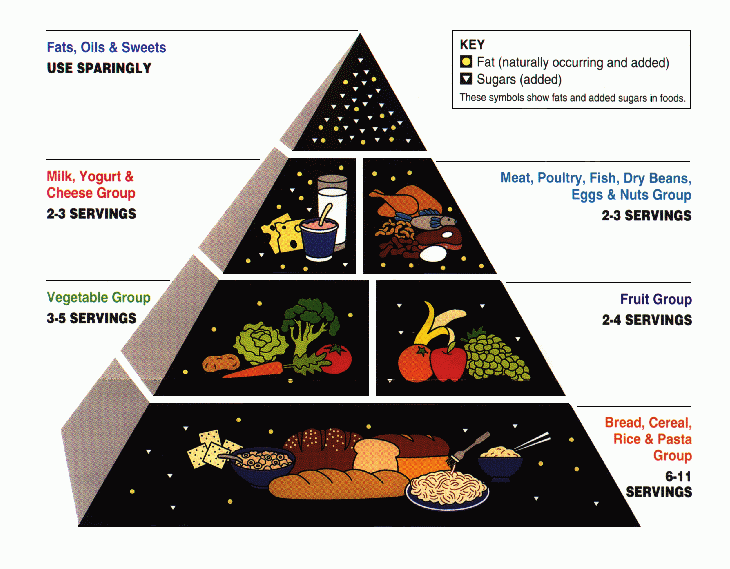
How World War II, cigarette companies, and an obscure 1937 law determine what you put in your mouth today: A Short History of the Sad, Modern American Diet.

read the article

July 2, 2025

“What do all fat, sick, unhealthy people have in common? At least this: they all eat.: An introduction to a new series about diet, psychiatric drug withdrawal, and performance.

read the article

June 25, 2025

 Bad Medicine, Antidepressant Withdrawal, and the Incalculable Costs of Medicating Normal: My full talk at the University of Nevada, Reno Medical School

read the article

June 18, 2025

Smart things other people said, Part II: A big two weeks in the world of bad science, bad journalism, and why it’s good news for us.

read the article
blue pinterest image with white text overlay

As I was taking my car to get serviced at 7:30 this morning, I pulled onto the highway and was met with a line of cars backed up for miles. I cursed myself for a moment, annoyed that I chose to take the highway at peak rush hour instead of taking the back roads. Whether or not the back roads were faster was irrelevant. My irritation revolved around getting caught in traffic in the first place, as if the thousands of other people on the road were out and driving stupidly just to piss off those of us who had very important places to be!

And then, a thought ran through my head: You aren’t in traffic. You are the traffic.

I think people have a deeply ingrained refusal to acknowledge their role in life’s frustrations. Every issue is turned outward. It’s always someone or something else who creates our problem, an uncontrollable and unpredictable force that befalls us without consent. But how often do we acknowledge that we are actually the willing participant in our issues? What role do we play in our problems?

I would argue that we have significant personal responsibility for 99% of our troubles. Honestly, I can’t think of a single problem in my current life that can’t be traced back to a choice I’ve made or actions I continue to take.

But it’s not just about blame. It’s about recognizing that you are the traffic. When you understand your role, you can harness your power. Do you want to take an exit? Or do you want to chug along, at a snail’s pace, yes, but without the accompanying rage? Next time, maybe you’ll take the back roads instead. Who knows what you’ll find there. Maybe that back road will be closed due to construction caused by drivers like you and cars like yours that day after day, break down the asphalt.

You contribute to the problems in the world. You contribute to the problems in your own life. These are absolute truths that apply to every beating heart.

So ask yourself this: Are you stuck in chaos? Or are you the chaos?


Need a little giggle? Order one of my Fuckit Buckets™.

three images of the fuckit bucket collection

After 15 years of depression and antidepressants, my mission is to help people find hope in the name of healing. My memoir on the subject, MAY CAUSE SIDE EFFECTS, publishes on May 10, 2022. Pre-order it on Barnes & Nobles, Amazon, or wherever books are sold. For the most up-to-date announcements, subscribe to my newsletter HAPPINESS IS A SKILL.

may cause side effects a memoir book picture and author brooke siem

More articles from the blog

see all articles

July 9, 2025

How World War II, cigarette companies, and an obscure 1937 law determine what you put in your mouth today: A Short History of the Sad, Modern American Diet.

read the article

July 2, 2025

“What do all fat, sick, unhealthy people have in common? At least this: they all eat.: An introduction to a new series about diet, psychiatric drug withdrawal, and performance.

read the article

June 25, 2025

 Bad Medicine, Antidepressant Withdrawal, and the Incalculable Costs of Medicating Normal: My full talk at the University of Nevada, Reno Medical School

read the article

June 18, 2025

Smart things other people said, Part II: A big two weeks in the world of bad science, bad journalism, and why it’s good news for us.

read the article

I find myself writing to you today from a rather odd place. There is pressure surrounding a particular issue in my personal life, and I can feel my inner world preparing for the earth to crack open. This isn’t unexpected, and the details don’t matter. But it renders a newsletter about happiness as a skill rather paradoxical, or so I first thought.

When I woke up this morning, I wondered what I could say to you when there is a distinct layer of fear and anxiety draped over my own life. I thought about sharing a TED talk, or a poem, or an excerpt from one of the many books I’ve read over the years. I wanted to default to the wisdom of someone else in hopes that they could offer guidance. For both of us.

pinteres blue orange image with text overlay

But as I forced myself into a short meditation this morning, for no reason other than when I want to meditate the least is exactly when I need it most, it occurred to me that although there is a blanket of tension pulled over my heart, underneath it all still beats the pulse of overwhelming gratitude. I get to feel all of this, the good and the bad and the scary and the magnificent.

This has happened, in this capacity, once before. Back in February, I rescued a six-year-old mutt, Bella, from a not-so-great situation in Sacramento. That first bitter cold night, I took her out for a quick walk before bed. She was skiddish and insecure, her little tail like Velcro against her soft belly. Just fifty feet from my front door, a male neighbor came out of his house, clearly drunk and/or high. Bella barked, and the neighbor came toward me. There was another bark, a pull at the leash, then slack. When I looked down, all that was left of Bella was an empty collar. I searched for her until my hands went numb, but she was part of the darkness.

She had only been with me for four hours.

When I got into bed that night, I thought about how my house is surrounded by the Nevada desert. In all likelihood, she was somewhere in those hills. If a coyote didn’t get her, the cold sure would.

The pain and guilt of it all left me in a state of shock, and still, I wrapped the covers around me and thought if something like this had to happen, I’m so grateful I at least have a warm bed to feel it in. Whenever my mind circled back to the thought of my scared little dog, alone in a strange place, I forced myself back to a place of gratitude. A soft bed. A house I love. A mom who drove across town, at midnight, to help me look for Bella.

I awoke at 3am, a faint sound of barking rousing me from sleep. Dumbfounded, I went to the front door. A winter wind pushed the door open and a flash of white and tan scurried past my feet. Somehow, despite being lost for hours in a place she’d never been, Bella found her way back home.

And now here I am again. The waves of life crashing in, steady gratitude providing the foundation underneath.

This, to me, is why we do the work. It’s why we practice happiness as a skill, every day in a million little ways. But the catch-22 is that in the midst of preparation, you can’t know what you’re preparing for. You have to trust that because you’ve put in the emotional work, that because you practice happiness when the seas are calm, you will be able to handle tsunamis. Because the waves of life will always come.

And if you’re lucky, you’ll realize what a gift it is to get to experience it all.

Need a little giggle? Order one of my Fuckit Buckets™.

three images of the fuckit bucket collection


After 15 years of depression and antidepressants, my mission is to help people find hope in the name of healing. My memoir on the subject, MAY CAUSE SIDE EFFECTS, publishes on September 6, 2022. Pre-order it on Barnes & Nobles, Amazon, or wherever books are sold. For the most up-to-date announcements, subscribe to my newsletter HAPPINESS IS A SKILL.

may cause side effects a memoir book picture and author brooke siem

More articles from the blog

see all articles

July 9, 2025

How World War II, cigarette companies, and an obscure 1937 law determine what you put in your mouth today: A Short History of the Sad, Modern American Diet.

read the article

July 2, 2025

“What do all fat, sick, unhealthy people have in common? At least this: they all eat.: An introduction to a new series about diet, psychiatric drug withdrawal, and performance.

read the article

June 25, 2025

 Bad Medicine, Antidepressant Withdrawal, and the Incalculable Costs of Medicating Normal: My full talk at the University of Nevada, Reno Medical School

read the article

June 18, 2025

Smart things other people said, Part II: A big two weeks in the world of bad science, bad journalism, and why it’s good news for us.

read the article

This week, I wanted to draw attention to the work of Andrew Huberman, an American neuroscientist and tenured professor in the Department of Neurobiology at the Stanford University School of Medicine.

Huberman specializes in the visual system and how it affects brain development, neuroplasticity, and neural regeneration and repair. Our eyes, as it turns out, have two functions. In addition to helping us read, see colors, and identify objects, our eyes are one of two primary systems (respiration is the other) that help tell our brain whether to be relaxed or alert.

The most obvious example of this is how we use our eyes to communicate the time of day. Our eyes perceive changes in light and therefore, our brain tells our body to awaken or become sleepy through an “aggregation of neurons” that dictate things like metabolism (are you hungry?) and movement (do you want to be lying down?) This is why sleep experts recommend shutting off harsh lights and avoiding screens toward the end of the day. When your eyes perceive the light, it triggers wakefulness in the body instead of sleepiness.

pinteres image with text overlay

The eyes also have a direct impact on our inner state. Our pupils contract when we’re relaxed and dialate when we’re focused or under any kind of stress, good or bad. For example, when you’re staring out over a beautiful coast or vista, your pupils get smaller in order to let you take in the breadth of your surroundings. This panoramic vision opens our window to the world, literally making it look bigger, which leads to stress reduction. This is one of the reasons why we feel so good in nature.

Conversely, our pupils dilate when we’re focused or stressed. Now we see the world through straws, the peripheral fields of our vision narrowed. When the visual field shrinks, according to Huberman, it triggers an increase in alertness. In a negative experience, that alertness is called stress, anxiety, or fear. In a positive experience, it might be called flow, excitement, or infatuation.

Like breathing, this is usually autonomic. Or rather, we don’t have to think about how our pupils adjust to see, just like we don’t have to think about breathing to stay alive. But just like we can hijack respiration and use breathing to our advantage, either because we’re blowing up balloons or because we’re practicing breathwork techniques in order to manage stress, we can also direct our gaze to influence our state of mind.

When we’re in a state of anxiety or negative stress, we can cue our brain to calm down by forcing ourselves to expand our field of view, to literally see the bigger picture.

Huberman said in a recent podcast, “If you look forward and you expand your field of view, so you kind of relax your eyes so that you can see as much of your environment around you as possible to the point where you can see yourself in that environment, what you are doing is turning off the attentional and, believe it or not, the stress mechanisms that drive your internal state towards stress.”

In short, to help keep stress levels down throughout the day, look around. Take breaks from staring at your computer to look out a window or check out the patterns in your ceiling. And if you’re having a bout of anxiety, force yourself to see a literal, bigger world.

Need a little giggle? Order one of my Fuckit Buckets™.

the fuckit bucket gold silver necklaces


After 15 years of depression and antidepressants, my mission is to help people find hope in the name of healing. My memoir on the subject, MAY CAUSE SIDE EFFECTS, publishes on September 6, 2022. Pre-order it on Barnes & Nobles, Amazon, or wherever books are sold. For the most up-to-date announcements, subscribe to my newsletter HAPPINESS IS A SKILL.

may cause side effects a memoir book picture and author brooke siem

More articles from the blog

see all articles

July 9, 2025

How World War II, cigarette companies, and an obscure 1937 law determine what you put in your mouth today: A Short History of the Sad, Modern American Diet.

read the article

July 2, 2025

“What do all fat, sick, unhealthy people have in common? At least this: they all eat.: An introduction to a new series about diet, psychiatric drug withdrawal, and performance.

read the article

June 25, 2025

 Bad Medicine, Antidepressant Withdrawal, and the Incalculable Costs of Medicating Normal: My full talk at the University of Nevada, Reno Medical School

read the article

June 18, 2025

Smart things other people said, Part II: A big two weeks in the world of bad science, bad journalism, and why it’s good news for us.

read the article

I’ve been feeling dejected since yesterday’s post. In fact, the whole research system has got me down. Let me be clear: I am not against research or science concept. What I am frustrated with, like everyone else, is the fucking system.

This all began when I came across something called predatory journals during my research for yesterday’s post. Predatory journals are junk journals at best and scams at worst. They exist because academics are under so much pressure to not only produce research but to publish research. You don’t get tenure without publishing. You don’t get a shot at tenure without publishing either. And given that the odds of landing a tenure-track job at a decent university are on par with making it to the NBA, young academics are under immense get work into the world.

Enter predatory journals.

To get a research article published in a competitive journal is an exercise in patience and will. I haven’t done it myself, but as the other half of a research academic trying to land a tenure track job, the process strikes me as the brainy equivalent of peeling your own skin off, letting it scab over, and peeling it off again. Some clever yet undeniably shitty people saw an opportunity to take advantage of struggling academics, so predatory journals were born. Think of them like the academic equivalent of late-night infomercials. For just $1700, you too can have your important research published in our official journal!

Yes, you read that right. Predatory journals often charge academics a fee for their work to appear in a bogus journal. That’s the hallmark of any good scam, right? They make you think you need them and then they take your money. It’s not always so obvious, though. Some journals are more sophisticated than others, leading well-intentioned researchers to unintentionally publish in hack journals. One study found that 5% of Italian researchers were duped into publishing in predatory journals.

In addition to exploiting academics, these journals don’t perform any sort of quality check on the work that gets submitted, leaving ample room for plagiarism, fraud, ethics, conflicts of interest, and general shitty science. But naive readers don’t know the difference, leading to a cancer of misinformation.

If this isn’t bad enough, predatory journals also create a sinkhole for funding and resources. One analysis found that 17% of articles sampled from predatory journals reported that their funding for the study was from the US Nationals Institute of Health (NIH). This means that one of the world’s foremost medical research center is funneling resources towards studies that end up in scientifically questionable journals.

“Little of this work will advance science,” the authors of the analysis say. “It is too dodgily reported (and possibly badly conducted) and too hard to find.”

What’s the deal with birds?

When I asked my partner, Justin, about predatory journals, he laughed and brushed it off with an, “I get spam emails from them all the time!” Then he giggled and pulled up a journal article entitled, “What’s the Deal with Birds?” published by Daniel T. Baldassarre in the Scientific Journal of Research and Reviews. The author, fed up with predatory journals, submitted a fancy-looking yet totally bogus “study” to a known predatory journal just to prove a point. And they actually published it, proving that just because something looks like research, doesn’t mean it’s legit.

More articles from the blog

see all articles

July 9, 2025

How World War II, cigarette companies, and an obscure 1937 law determine what you put in your mouth today: A Short History of the Sad, Modern American Diet.

read the article

July 2, 2025

“What do all fat, sick, unhealthy people have in common? At least this: they all eat.: An introduction to a new series about diet, psychiatric drug withdrawal, and performance.

read the article

June 25, 2025

 Bad Medicine, Antidepressant Withdrawal, and the Incalculable Costs of Medicating Normal: My full talk at the University of Nevada, Reno Medical School

read the article

June 18, 2025

Smart things other people said, Part II: A big two weeks in the world of bad science, bad journalism, and why it’s good news for us.

read the article

I’ve said it before and I’ll say it again: I am not a doctor. I am also not a researcher, pharmacist, or psychologist. I don’t have a PhD. Or a Masters. My Bachelor’s degree is in history. Not a specific part of history, but of all time. I’ve also got a culinary degree that ultimately led me to compete on—and win—Food Network’s “Chopped,” as well as an XPT Life certification that allows me to coach movement and breathwork.

All this to say: On paper, I’m no psychiatric expert.

But life has a funny way of shoving us down unexpected paths, and despite a resume that suggests my time is best spent in the kitchen or the gym, I now find myself as an emerging voice in the fight against the depression and antidepressant epidemic.

I would be lying if I told you that I was happy to hold this torch. But like an avalanche that can’t be stopped, I sealed my fate when I tipped a snowball over the mountain back in July of 2017 and agreed to write a memoir about my year of international travel. The book was to be called Ladyballs, and it would have a snarky, boss bitch attitude about leaving a shitty life for one full of global adventure. Eat, Pray, Love for disillusioned millennials.

Disgusting, right?

Like most work that overleans on sarcasm, the book’s irreverent attitude was a coverup for the story I was still too ashamed to tell: I’d spent half my life on antidepressants, and after a hell year of getting off them, I had no idea who I was or what I was supposed to do with myself.

Ladyballs ultimately fell through, leaving me with nothing but a shitty first draft of a book no one should ever read. But thank God for that shitty draft, because buried in it was nuggets of the real story, the story of what happened after I booked a one-way ticket to Malaysia and got off fifteen years of antidepressants, one by one by one by one by one. As of today, my memoir May Cause Side Effects is out for submission.

Which brings me here. I spent the last two and a half years writing May Cause Side Effects, with no guarantees that it will ever get published. While my agent is busy doing her job, I am tasked with pivoting away from my image as a chef and to what they call, a “recognized expert” in the field. And since I don’t have letters after my name that automatically deem me an expert, I’ve got a different sort of work to do.

For years, I’ve been thinking about how I can use my experience to add value to the conversation surrounding antidepressants without making black or white statements, alienating other people’s choices, or getting overly political. Now that I’ve been published in a major news outlet, started seriously tweeting, and given a few speeches on the topic, I’ve come to the solemn understanding that there’s no undivisive way to enter into the conversation about antidepressants. Like climate change and income inequality, depression and antidepressants are inherently political. The message consumers are presented with is born in a profit-driven marketing machine fueled by researchers who depend upon government money to conduct narrow studies that result in limited data extracted by pharmaceutical companies who funnel billions of dollars into government policy and television commercials in order to convince you that your problems are all in your head.

Did your eyes glaze over a little bit during that sentence? Don’t worry, it’s not your fault. You and millions of other people have a mental illness, just like millions of people have diabetes! The brain is an organ, just like the pancreas. Diabetics take insulin for a faulty pancreas, so why not take antidepressants for a faulty brain?

Except despite a few decades of rampant and rising antidepressant use, depression and suicide rates continue to rise, so much so that psychiatrists from Keele University just published a review hypothesizing that prescribing antidepressants before someone becomes depressed might lower their chance of developing depression.

That’s like giving healthy people chemo just in case they get cancer.

Which brings me to why I’m here. My work over the past few years has led me to believe that without a (highly unlikely) overhaul of our entire mental health and healthcare system, the onus is on the individual patient to do the research and take their treatment, therapy, and healing into their own hands-or face the consequences of unknown, unsubstantiated long term antidepressant drug use. This means that people need to think for themselves, learn how to do their own research, and unscrew the notion that we have any real understanding of what causes depression. Because we don’t. And I don’t see us cracking that code anytime soon.

That said, I want to emphasize the following: Since getting off all my antidepressants, I have been honored to work with a variety of outstanding medical professionals, from psychologists to researchers to psychiatrists. There are solid humans out there working to help people truly get better. This is a stark contrast to the psychiatric and psychological experiences I had as a young adult, and I regularly wonder whether or not my life would have taken the same course if I hadn’t had shit psychiatric luck so early in my life.

But I did, so here we are.

My goal is to take readers through my own process of learning, uncovering, and understanding this complex issue. I reserve the right to question what I’ve been told, to change my mind, and to make mistakes. I can’t promise that I’ll always be right. But I can promise to admit when I’m wrong. Because the only truth I know is the one I experienced, and that’s not enough for me.
If you’ve made it this far and you like what I’m doing, I’d appreciate it if you could give me a follow on Twitter or share my work with someone who might appreciate it.

Thanks for sticking with me,
Brooke

More articles from the blog

see all articles

July 9, 2025

How World War II, cigarette companies, and an obscure 1937 law determine what you put in your mouth today: A Short History of the Sad, Modern American Diet.

read the article

July 2, 2025

“What do all fat, sick, unhealthy people have in common? At least this: they all eat.: An introduction to a new series about diet, psychiatric drug withdrawal, and performance.

read the article

June 25, 2025

 Bad Medicine, Antidepressant Withdrawal, and the Incalculable Costs of Medicating Normal: My full talk at the University of Nevada, Reno Medical School

read the article

June 18, 2025

Smart things other people said, Part II: A big two weeks in the world of bad science, bad journalism, and why it’s good news for us.

read the article