
Subscribe to the MAY CAUSE SIDE EFFECTS substack, a newsletter devoted to antidepressant withdrawal education and recovery.

menu

This is Part II of Debunking the Chemical Imbalance theory. Part I can be found here.

Psychiatry, like most hard sciences, suffers as research trickle down from laboratories to the mainstream. Take our friend from Part I, Harvard neuropsychopharmacologist Joseph Schildkraut, who said in 1965 that the chemical imbalance theory was “at best a reductionistic oversimplification of a very complex biological state.”

pinterest image with text overlay

Though Schildkraut explicitly stated that there was no evidence to support or disprove the theory—which led to a generation of research that could not find a statistically notable link between biology and mental disorders—Schildkraut’s research was still cherry-picked by a verywellmind journalist for a January 2021 article entitled, “The Chemistry of Depression: What is the Biochemical Basis of Depression?”

The article gives the reader a general overview of how neurotransmitters work, the three neurotransmitters usually associated with depression (dopamine, norepinephrine, and serotonin), and the all familiar assumption that low levels of these chemicals may be associated with depression.

There are so many problems with this article that it would be impossible for me to unpack it all in one issue, so I’m going to focus on the most egregious statement and go from there: “Restoring the balance of brain chemicals could help alleviate symptoms—which is where the different classes of antidepressant medications may come in.”

For the sake of argument, let’s assume that an imbalance of “brain chemicals” is the cause of depression. How do we measure that imbalance in order to determine the amount and kind of antidepressants needed to restore the balance?

*crickets*

There is not, and never has been, a single test to measure the real-time amount of an individual’s “brain chemicals.” You cannot measure neurotransmitters in a blood test. You cannot measure neurotransmitters in an MRI or CT Scan. You can get an estimate of neurotransmitter levels by measuring something called biogenic amines in urine and spinal fluid. This test operates under the assumption that the results are an accurate depiction of what’s going on in the brain in real-time. This is a shaky assumption given that neurotransmitter levels literally change by the second and that up to 95% of serotonin is produced in the intestines.

There is also some research surrounding measuring neurotransmitter levels through PET scans, but like the biogenic amine test, it is at best, a snapshot in time that will never be relevant for 99.9% of patients.

If we don’t have any way to accurately measure neurotransmitter levels, then it stands to reason that we can’t know what is considered “balanced” in the first place, which is why the administration of psychiatric drugs is more of a guess than a science.

Knowing all this, a slew of questions emerge. If low levels of “brain chemicals” are responsible for depression, why is it that a drug filled with synthetic neurotransmitters can take more than a month to have an effect? And, if chemicals are the primary culprit, why do antidepressants only work for about 60% of patients? (Not to mention the fact that in the long run, talk therapy works as well as drug therapy, without the nasty side effects.)

Some people will argue that from a practical point of view, the validity of the chemical imbalance theory is irrelevant if the drugs help people. This argument would sit better with me if 1) pharmaceutical companies weren’t allowed to manipulate patients with misinformation based on a bunk theory. 2) Mainstream health websites like verywellmind didn’t continue to effectively mansplain the chemical cause of depression in exchange for website traffic. 3) If practitioners enforced short-term use of these drugs and 4) if practitioners actually knew how to take patients off these drugs safely and effectively.

But since none of those things are true, patients end up on a hamster wheel of drug-dependent diagnosis, spending their lives believing that their mental anguish is caused by a chemical imbalance that relieves them of actually addressing the problems and traumas in their lives that lead to depression.

In Part III, I’ll specifically focus on how pharmaceutical companies create billions of dollars in revenue by exploiting the chemical imbalance theory in order to market antidepressants to the general public.


image of Fuckit Bucket™ products

Need a little giggle? Order one of my Fuckit Buckets™.

Look, we know that life is a special sort of disaster right now. Your closet is your office, the kids are still at home, and still your mother-law is calling you fat again. Let this little charm be a reminder that sometimes you have to chuck it in the Fuckit Bucket™ and move on!

Get your own Fuckit Bucket™

After 15 years of depression and antidepressants, my mission is to help people find hope in the name of healing. My memoir on the subject, MAY CAUSE SIDE EFFECTS, publishes on May 10, 2022. Pre-order it on Barnes & Nobles, Amazon, or wherever books are sold. For the most up-to-date announcements, subscribe to my newsletter HAPPINESS IS A SKILL.


Coming September 6, 2022

May Cause Side Effects

Brooke’s memoir is now available for preorder wherever books are sold.

This is a heart-rending and tender memoir that will start conversations we urgently need to have. It’s moving and important.

Johann Hari, author of New York Times bestseller Chasing the Scream and international bestseller 
Lost Connections: Uncovering the Real Causes of Depression—and the Unexpected Solutions

More articles from the blog

see all articles
July 9, 2025

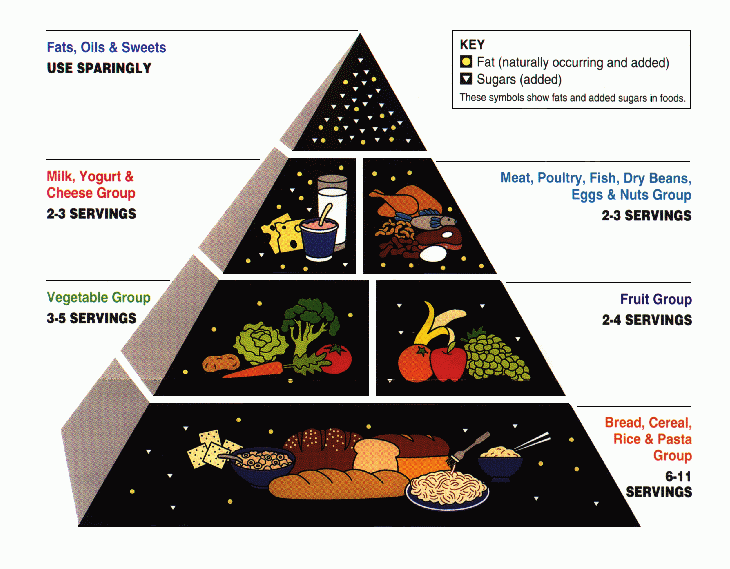
How World War II, cigarette companies, and an obscure 1937 law determine what you put in your mouth today: A Short History of the Sad, Modern American Diet.

read the article

July 2, 2025

“What do all fat, sick, unhealthy people have in common? At least this: they all eat.: An introduction to a new series about diet, psychiatric drug withdrawal, and performance.

read the article

June 25, 2025

 Bad Medicine, Antidepressant Withdrawal, and the Incalculable Costs of Medicating Normal: My full talk at the University of Nevada, Reno Medical School

read the article

June 18, 2025

Smart things other people said, Part II: A big two weeks in the world of bad science, bad journalism, and why it’s good news for us.

read the article

I’m going to take the time to dive into the chemical imbalance theory of depression, and why it’s a big ‘o pile of crap. I’m taking the time to do this because 80% of people believe that depression is caused by a chemical imbalance, despite overwhelming evidence otherwise. Today I will focus on the history and discovery of antidepressants and the chemical imbalance theory.

The first antidepressant was discovered by accident.

In 1952, a drug designed to treat tuberculosis, iproniazid, had a surprising side effect: patients in the sanatorium became euphoric when treated with this drug.

Researchers experimented with the mood-altering effects of iproniazid for five years, ultimately discovering that it worked by inhibiting the monoamine oxidase (MAOI) enzyme, which breaks down serotonin and dopamine—two of the neurotransmitters involved in pleasurable emotions. But in 1957, after treating 400,000 depressed patients with the drug, researchers noticed that when patients ate cheese, chocolate, or alcohol, their blood pressure skyrocketed to dangerous levels. As it turns out, iproniazid didn’t just affect serotonin and dopamine, but norepinephrine as well. A release of norepinephrine constricts blood vessels, which leads to elevated blood pressure. Known as “the cheese reaction,” the use of iproniazid was quickly stopped.

But around the same time, researchers were studying a plant known as Rauwolfia serpentina, which had been used medicinally in India for everything from calming babies to insomnia to high blood pressure. Chemists extracted the active compound, called it reserpine, and began testing it on animals.

text overlay image for pinterest

Resperine was found to lower serotonin, norepinephrine, and dopamine, all of which lead to a period of near-catatonic inactivity in the animals. It was concluded that low serotonin, norepinephrine, and dopamine levels create a depressed state, and the “chemical imbalance theory” was born.

But there’s a catch: First, resperine was also used as an antipsychotic (rather, a tranquilizer) for schizophrenia and Huntington’s disease. Despite high doses and long-term use, only 6% percent of patients developed clinical depression, and all 6% had a history of depression to begin with. Bafflingly, in 1955, resperine was also the first compound shown to be an effective antidepressant, despite actually reducing levels of serotonin, norepinephrine, and dopamine.

Still, the discovery of iproniazid and resperine gave rise to the theory that different chemicals in the brain create different states of mind. Researchers and patients, it seemed, desperately wanted it to be true. Who wouldn’t want to distill their melancholy into a neat little bow that can be explained by a simple unbalance of a handful of chemicals?

But as early as 1965, the American Journal of Psychiatry put out a paper by Harvard neuropsychopharmacologist Joseph Schildkraut, who said the chemical imbalance theory was “at best a reductionistic oversimplification of a very complex biological state” and that there was no evidence to support or disprove the theory.

Schildkraut’s declaration inspired a generation of researchers to prove him wrong. But over and over again, they failed to find the link between statistically different levels of neurotransmitters between depressed patients and happy ones.

As the Council for Evidence-Based Psychiatry says, “Although scientists have been testing the chemical imbalance theory’s validity for over 40 years–and despite literally thousands of studies–there is still not one piece of direct evidence proving the theory correct. The chemical imbalance theory, in relation to any mental health disorder is thus unsubstantiated, yet a societal belief in chemical imbalances, largely owing to effective pharmaceutical marketing, remains prevalent today.”

In next blog post, I’ll explore the fatal flaws of the chemical imbalance theory, followed by the influence marketing has had on keeping this myth alive. Meanwhile, I’m keeping the links light today. There’s plenty to dig through in the issue itself.

Need a little giggle? Order one of my Fuckit Buckets™.

three images of the fuckit bucket collection

After 15 years of depression and antidepressants, my mission is to help people find hope in the name of healing. My memoir on the subject, MAY CAUSE SIDE EFFECTS, publishes on May 10, 2022. Pre-order it on Barnes & Nobles, Amazon, or wherever books are sold. For the most up-to-date announcements, subscribe to my newsletter HAPPINESS IS A SKILL.

Coming September 6, 2022

May Cause Side Effects

Brooke’s memoir is now available for preorder wherever books are sold.

This is a heart-rending and tender memoir that will start conversations we urgently need to have. It’s moving and important.

Johann Hari, author of New York Times bestseller Chasing the Scream and international bestseller 
Lost Connections: Uncovering the Real Causes of Depression—and the Unexpected Solutions

More articles from the blog

see all articles

July 9, 2025

How World War II, cigarette companies, and an obscure 1937 law determine what you put in your mouth today: A Short History of the Sad, Modern American Diet.

read the article

July 2, 2025

“What do all fat, sick, unhealthy people have in common? At least this: they all eat.: An introduction to a new series about diet, psychiatric drug withdrawal, and performance.

read the article

June 25, 2025

 Bad Medicine, Antidepressant Withdrawal, and the Incalculable Costs of Medicating Normal: My full talk at the University of Nevada, Reno Medical School

read the article

June 18, 2025

Smart things other people said, Part II: A big two weeks in the world of bad science, bad journalism, and why it’s good news for us.

read the article

As I sit here on this gloomy spring morning, the tentacles of a migraine still latched onto the left side of my head, I am reminded of the phrase, “Do as much as necessary and as little as possible.”

wooden doll building wooden wall and text overlay

I first heard this phrased used around physical training. Think of an Olympian, for example, who has a finely tuned workout schedule designed to create gold-medal worthy results. She can’t back off and do less, otherwise, she risks her performance. She also shouldn’t do more, even if she’s capable of it, because doing more interferes with the rest and recovery necessary to perform at a high level. She doing both as much as necessary and as little as possible to reach her goals.

The idea is that doing more for the sake of doing more isn’t beneficial. That extra energy has to go somewhere, and if you’re not careful, that untamed energy leads to overuse and destruction.

Case in point: a Sunday night migraine that bleeds over to Monday because you broke your “no work on Saturday, under any circumstances, because you need to force yourself to rest so you don’t get sick” rule.

“Do as much as necessary and as little as possible” is tricky, though. Not only does it go against the “hustle harder” mantra that has so dominated our culture over the last decade, but it also gives those without much…shall we say, gumption, a route to laziness.

Take parenting, for example. I know one couple who, in all likelihood, will push their kid to take the SATs twice (and the ACTs twice, for good measure), even if the first go around yields scores strong enough to get the kid into her school of choice. I also know another couple whose neuro-typical seven year old can’t read or write his own name, but because they feed the kid and plop him in front of Zoom school for an hour a day, they’ve rationalized that they’re doing what is “necessary” to keep CPS off their back.

Both scenarios are recipes for different types of destruction. The SAT kid doesn’t need to expend more energy when the goal has already been met. Doing so will only lead to unnecessary, and prolonged anxiety, self-doubt, and shame. Meanwhile, the illiterate seven year old doesn’t even have a shot because of his parent’s fundamental disregard over what constitutes “necessary” parenting.

Ultimately, what is “necessary” is subjective and meaningless without clear goals or expectations. Get clear on what you want and what it takes to get there, but stop once you cross that line. Any effort beyond what is required is a liability.


Need a little giggle? Order one of my Fuckit Buckets™.

gold the fuckit bucket charm

After 15 years of depression and antidepressants, my mission is to help people find hope in the name of healing. My memoir on the subject, MAY CAUSE SIDE EFFECTS, publishes on May 10, 2022. Pre-order it on Barnes & Nobles, Amazon, or wherever books are sold. For the most up-to-date announcements, subscribe to my newsletter HAPPINESS IS A SKILL.

Coming September 6, 2022

May Cause Side Effects

Brooke’s memoir is now available for preorder wherever books are sold.

This is a heart-rending and tender memoir that will start conversations we urgently need to have. It’s moving and important.

Johann Hari, author of New York Times bestseller Chasing the Scream and international bestseller 
Lost Connections: Uncovering the Real Causes of Depression—and the Unexpected Solutions

More articles from the blog

see all articles

July 9, 2025

How World War II, cigarette companies, and an obscure 1937 law determine what you put in your mouth today: A Short History of the Sad, Modern American Diet.

read the article

July 2, 2025

“What do all fat, sick, unhealthy people have in common? At least this: they all eat.: An introduction to a new series about diet, psychiatric drug withdrawal, and performance.

read the article

June 25, 2025

 Bad Medicine, Antidepressant Withdrawal, and the Incalculable Costs of Medicating Normal: My full talk at the University of Nevada, Reno Medical School

read the article

June 18, 2025

Smart things other people said, Part II: A big two weeks in the world of bad science, bad journalism, and why it’s good news for us.

read the article
blue pinterest image with white text overlay

As I was taking my car to get serviced at 7:30 this morning, I pulled onto the highway and was met with a line of cars backed up for miles. I cursed myself for a moment, annoyed that I chose to take the highway at peak rush hour instead of taking the back roads. Whether or not the back roads were faster was irrelevant. My irritation revolved around getting caught in traffic in the first place, as if the thousands of other people on the road were out and driving stupidly just to piss off those of us who had very important places to be!

And then, a thought ran through my head: You aren’t in traffic. You are the traffic.

I think people have a deeply ingrained refusal to acknowledge their role in life’s frustrations. Every issue is turned outward. It’s always someone or something else who creates our problem, an uncontrollable and unpredictable force that befalls us without consent. But how often do we acknowledge that we are actually the willing participant in our issues? What role do we play in our problems?

I would argue that we have significant personal responsibility for 99% of our troubles. Honestly, I can’t think of a single problem in my current life that can’t be traced back to a choice I’ve made or actions I continue to take.

But it’s not just about blame. It’s about recognizing that you are the traffic. When you understand your role, you can harness your power. Do you want to take an exit? Or do you want to chug along, at a snail’s pace, yes, but without the accompanying rage? Next time, maybe you’ll take the back roads instead. Who knows what you’ll find there. Maybe that back road will be closed due to construction caused by drivers like you and cars like yours that day after day, break down the asphalt.

You contribute to the problems in the world. You contribute to the problems in your own life. These are absolute truths that apply to every beating heart.

So ask yourself this: Are you stuck in chaos? Or are you the chaos?


Need a little giggle? Order one of my Fuckit Buckets™.

three images of the fuckit bucket collection

After 15 years of depression and antidepressants, my mission is to help people find hope in the name of healing. My memoir on the subject, MAY CAUSE SIDE EFFECTS, publishes on May 10, 2022. Pre-order it on Barnes & Nobles, Amazon, or wherever books are sold. For the most up-to-date announcements, subscribe to my newsletter HAPPINESS IS A SKILL.

may cause side effects a memoir book picture and author brooke siem

More articles from the blog

see all articles

July 9, 2025

How World War II, cigarette companies, and an obscure 1937 law determine what you put in your mouth today: A Short History of the Sad, Modern American Diet.

read the article

July 2, 2025

“What do all fat, sick, unhealthy people have in common? At least this: they all eat.: An introduction to a new series about diet, psychiatric drug withdrawal, and performance.

read the article

June 25, 2025

 Bad Medicine, Antidepressant Withdrawal, and the Incalculable Costs of Medicating Normal: My full talk at the University of Nevada, Reno Medical School

read the article

June 18, 2025

Smart things other people said, Part II: A big two weeks in the world of bad science, bad journalism, and why it’s good news for us.

read the article

I find myself writing to you today from a rather odd place. There is pressure surrounding a particular issue in my personal life, and I can feel my inner world preparing for the earth to crack open. This isn’t unexpected, and the details don’t matter. But it renders a newsletter about happiness as a skill rather paradoxical, or so I first thought.

When I woke up this morning, I wondered what I could say to you when there is a distinct layer of fear and anxiety draped over my own life. I thought about sharing a TED talk, or a poem, or an excerpt from one of the many books I’ve read over the years. I wanted to default to the wisdom of someone else in hopes that they could offer guidance. For both of us.

pinteres blue orange image with text overlay

But as I forced myself into a short meditation this morning, for no reason other than when I want to meditate the least is exactly when I need it most, it occurred to me that although there is a blanket of tension pulled over my heart, underneath it all still beats the pulse of overwhelming gratitude. I get to feel all of this, the good and the bad and the scary and the magnificent.

This has happened, in this capacity, once before. Back in February, I rescued a six-year-old mutt, Bella, from a not-so-great situation in Sacramento. That first bitter cold night, I took her out for a quick walk before bed. She was skiddish and insecure, her little tail like Velcro against her soft belly. Just fifty feet from my front door, a male neighbor came out of his house, clearly drunk and/or high. Bella barked, and the neighbor came toward me. There was another bark, a pull at the leash, then slack. When I looked down, all that was left of Bella was an empty collar. I searched for her until my hands went numb, but she was part of the darkness.

She had only been with me for four hours.

When I got into bed that night, I thought about how my house is surrounded by the Nevada desert. In all likelihood, she was somewhere in those hills. If a coyote didn’t get her, the cold sure would.

The pain and guilt of it all left me in a state of shock, and still, I wrapped the covers around me and thought if something like this had to happen, I’m so grateful I at least have a warm bed to feel it in. Whenever my mind circled back to the thought of my scared little dog, alone in a strange place, I forced myself back to a place of gratitude. A soft bed. A house I love. A mom who drove across town, at midnight, to help me look for Bella.

I awoke at 3am, a faint sound of barking rousing me from sleep. Dumbfounded, I went to the front door. A winter wind pushed the door open and a flash of white and tan scurried past my feet. Somehow, despite being lost for hours in a place she’d never been, Bella found her way back home.

And now here I am again. The waves of life crashing in, steady gratitude providing the foundation underneath.

This, to me, is why we do the work. It’s why we practice happiness as a skill, every day in a million little ways. But the catch-22 is that in the midst of preparation, you can’t know what you’re preparing for. You have to trust that because you’ve put in the emotional work, that because you practice happiness when the seas are calm, you will be able to handle tsunamis. Because the waves of life will always come.

And if you’re lucky, you’ll realize what a gift it is to get to experience it all.

Need a little giggle? Order one of my Fuckit Buckets™.

three images of the fuckit bucket collection


After 15 years of depression and antidepressants, my mission is to help people find hope in the name of healing. My memoir on the subject, MAY CAUSE SIDE EFFECTS, publishes on September 6, 2022. Pre-order it on Barnes & Nobles, Amazon, or wherever books are sold. For the most up-to-date announcements, subscribe to my newsletter HAPPINESS IS A SKILL.

may cause side effects a memoir book picture and author brooke siem

More articles from the blog

see all articles

July 9, 2025

How World War II, cigarette companies, and an obscure 1937 law determine what you put in your mouth today: A Short History of the Sad, Modern American Diet.

read the article

July 2, 2025

“What do all fat, sick, unhealthy people have in common? At least this: they all eat.: An introduction to a new series about diet, psychiatric drug withdrawal, and performance.

read the article

June 25, 2025

 Bad Medicine, Antidepressant Withdrawal, and the Incalculable Costs of Medicating Normal: My full talk at the University of Nevada, Reno Medical School

read the article

June 18, 2025

Smart things other people said, Part II: A big two weeks in the world of bad science, bad journalism, and why it’s good news for us.

read the article

This week, I wanted to draw attention to the work of Andrew Huberman, an American neuroscientist and tenured professor in the Department of Neurobiology at the Stanford University School of Medicine.

Huberman specializes in the visual system and how it affects brain development, neuroplasticity, and neural regeneration and repair. Our eyes, as it turns out, have two functions. In addition to helping us read, see colors, and identify objects, our eyes are one of two primary systems (respiration is the other) that help tell our brain whether to be relaxed or alert.

The most obvious example of this is how we use our eyes to communicate the time of day. Our eyes perceive changes in light and therefore, our brain tells our body to awaken or become sleepy through an “aggregation of neurons” that dictate things like metabolism (are you hungry?) and movement (do you want to be lying down?) This is why sleep experts recommend shutting off harsh lights and avoiding screens toward the end of the day. When your eyes perceive the light, it triggers wakefulness in the body instead of sleepiness.

pinteres image with text overlay

The eyes also have a direct impact on our inner state. Our pupils contract when we’re relaxed and dialate when we’re focused or under any kind of stress, good or bad. For example, when you’re staring out over a beautiful coast or vista, your pupils get smaller in order to let you take in the breadth of your surroundings. This panoramic vision opens our window to the world, literally making it look bigger, which leads to stress reduction. This is one of the reasons why we feel so good in nature.

Conversely, our pupils dilate when we’re focused or stressed. Now we see the world through straws, the peripheral fields of our vision narrowed. When the visual field shrinks, according to Huberman, it triggers an increase in alertness. In a negative experience, that alertness is called stress, anxiety, or fear. In a positive experience, it might be called flow, excitement, or infatuation.

Like breathing, this is usually autonomic. Or rather, we don’t have to think about how our pupils adjust to see, just like we don’t have to think about breathing to stay alive. But just like we can hijack respiration and use breathing to our advantage, either because we’re blowing up balloons or because we’re practicing breathwork techniques in order to manage stress, we can also direct our gaze to influence our state of mind.

When we’re in a state of anxiety or negative stress, we can cue our brain to calm down by forcing ourselves to expand our field of view, to literally see the bigger picture.

Huberman said in a recent podcast, “If you look forward and you expand your field of view, so you kind of relax your eyes so that you can see as much of your environment around you as possible to the point where you can see yourself in that environment, what you are doing is turning off the attentional and, believe it or not, the stress mechanisms that drive your internal state towards stress.”

In short, to help keep stress levels down throughout the day, look around. Take breaks from staring at your computer to look out a window or check out the patterns in your ceiling. And if you’re having a bout of anxiety, force yourself to see a literal, bigger world.

Need a little giggle? Order one of my Fuckit Buckets™.

the fuckit bucket gold silver necklaces


After 15 years of depression and antidepressants, my mission is to help people find hope in the name of healing. My memoir on the subject, MAY CAUSE SIDE EFFECTS, publishes on September 6, 2022. Pre-order it on Barnes & Nobles, Amazon, or wherever books are sold. For the most up-to-date announcements, subscribe to my newsletter HAPPINESS IS A SKILL.

may cause side effects a memoir book picture and author brooke siem

More articles from the blog

see all articles

July 9, 2025

How World War II, cigarette companies, and an obscure 1937 law determine what you put in your mouth today: A Short History of the Sad, Modern American Diet.

read the article

July 2, 2025

“What do all fat, sick, unhealthy people have in common? At least this: they all eat.: An introduction to a new series about diet, psychiatric drug withdrawal, and performance.

read the article

June 25, 2025

 Bad Medicine, Antidepressant Withdrawal, and the Incalculable Costs of Medicating Normal: My full talk at the University of Nevada, Reno Medical School

read the article

June 18, 2025

Smart things other people said, Part II: A big two weeks in the world of bad science, bad journalism, and why it’s good news for us.

read the article

One of the pitfalls of depression is that because it tends to come in waves, the habits we gather while we’re feeling okay often fall by the wayside when we’re feeling rough. And while I’m a huge advocate of forcing yourself to maintain those habits during times of darkness, I know that sometimes, it’s just not possible.

Luckily, we live in a time where technology is literally at our fingertips. There’s a lot of junk in that app store, but there are also a handful of stellar apps that can help hold your hand through the waves. Here are a few of my favorites.

Created by game designer Jane McGonigal, SuperBetter is an app that builds resilience. Born after a traumatic brain injury left McGonigal suicidal, SuperBetter brings the concepts of gaming into real life. For McGonigal, this meant accomplishing Power-Ups like putting on socks and establishing Allies with friends and family to help her achieve her Quest of returning to a normal life.

The game is fully customizable. If you are battling Depression as your Bad Guy, accomplishing little tasks like drinking a glass of water, walking the dog, or getting up off the chair and moving around all generate points that count toward your win. Over time, these accomplishments create change on a neural level, leading to an overall more positive state.

screen shot of superbetter application home screen

MoodMeter is an aesthetically pleasing, data-driven app designed to help you track and shift your day-to-day mood. This can be especially helpful for those suffering from depression because depression is the great manipulator. One dark day can feel like it erases ten days of progress, but if you have visual data that proves you are ultimately on the upswing, it can be easier to manage those dark days.

screen shot of mood meterapplication home screen

Drawing on 40+ years of research and clinical experience by psychiatrist Dr. David Spiegel, Reveri is a digital hypnosis app designed to create immediate relief from pain, stress, anxiety, sleep problems, and more.

Hypnosis is a tricky word often associated with quack therapists or stage shows. But in this context, it’s more of an imagination tool that helps kick the mind and body into a state of active rest. It is a state of highly focused attention, where distracting thoughts are decreased and the mind becomes more open to new ideas and perspectives.

Each exercise takes about 10 minutes and can be treated like a daily meditation. The one caveat is that because the app is new, it can be a little buggy. But given the team of people behind it, including neuroscientist Andrew Huberman and technologist Ariel Poler, it’s likely these issues will sort out over time.

screen shot of reveri application home screen

Need a little giggle? Order one of my Fuckit Buckets™.

gold the fuckit bucket charm

may cause side effects a memoir book picture and author brooke siem

After 15 years of depression and antidepressants, my mission is to help people find hope in the name of healing. My memoir on the subject, MAY CAUSE SIDE EFFECTS, publishes on September 6, 2022. Pre-order it on Barnes & Nobles, Amazon, or wherever books are sold. For the most up-to-date announcements, subscribe to my newsletter HAPPINESS IS A SKILL.

More articles from the blog

see all articles

July 9, 2025

How World War II, cigarette companies, and an obscure 1937 law determine what you put in your mouth today: A Short History of the Sad, Modern American Diet.

read the article

July 2, 2025

“What do all fat, sick, unhealthy people have in common? At least this: they all eat.: An introduction to a new series about diet, psychiatric drug withdrawal, and performance.

read the article

June 25, 2025

 Bad Medicine, Antidepressant Withdrawal, and the Incalculable Costs of Medicating Normal: My full talk at the University of Nevada, Reno Medical School

read the article

June 18, 2025

Smart things other people said, Part II: A big two weeks in the world of bad science, bad journalism, and why it’s good news for us.

read the article

For most of my life, I struggled with the assumption that people with letters after their name were not only smarter, more powerful, and more successful than me, but that the research they create is gospel. I’m not sure when or how this seed was planted, but it’s lead to a lifelong feeling of inadequacy—especially throughout my twenties. Doctors and scientists were busy saving lives and stumbling across eureka. Meanwhile, I made silly cupcakes for a living and couldn’t afford health insurance.

Assuming that all doctors and research belonged on a pedestal is also part of why I so easily accepted their mental health diagnosis. I knew I was depressed, but what did I know about how to fix it? A doctor told me that my brain was broken and that the pills I was taking did not have any major side effects. Who was I to question someone who spent 12 years learning how to identify and treat my exact problem? It is only since getting off the antidepressants that I’ve begun to understand how complicated, political, and often corrupt the medical and research system actually is. And this isn’t conspiracy. Bad science exists in every discipline—The Guardian even has an entire vertical dedicated to it.

While researchers are adept at sorting out bad science from the good, regular folk rarely know the difference, which can lead to a plethora of misinformation and ill-informed opinion. But I’ve learned a few basic strategies to help us plebians suss out the good from bad when it comes to mental health research. This is by no means a foolproof or comprehensive list, but it’s a start.

Where to find research papers:

pinterest graphic with text overlay on blue background

PubMed is a free search engine that primarily accesses the MEDLINE (Medical Literature Analysis and Retrieval System Online) database of research on life science and medical topics. It allows you to sort by a variety of matches, including author, publication date, and journal. It also has a nifty search feature that will only give you results that include free full text. Unfortunately, the full text of many research papers are hidden behind paywalls, which leaves the average person stuck with nothing but abstracts.

Google Scholar is…well, the Google of research. Whether you’re looking for research on antidepressants or conifer trees, Google Scholar is the grand poobah of scientific information. However, because Google Scholar is a search engine and not a subject-dedicated database (like PubMed), Google Scholar strives to include as many journals as possible, including junk journals and predatory journals. These predatory journals are known for exploiting the academic publishing business model, not checking journal articles for quality, and pushing agenda even in clear cases of fraudulent science.

All this to say that before a paper is read, the reader needs to do a bit of due diligence to make sure that what they’re reading is legitimate. Even then, we can’t be 100% sure. Case in point: Andrew Wakefield’s fraudulent research claiming that vaccines cause autism.

I know, I know. The number one rule in research is: don’t use Wikipedia as a source. Any old geezer (including you) can log on to Wikipedia and change an entry (any entry) to say anything and everything, which means that Wikipedia is riddled with errors and should not be referenced as truth in a research paper or reported article. But since we’re not reporting for the New York Times, Wikipedia is a good place to start because of the references listed at the bottom of each Wikipedia entry. The Wikipedia page on Antidepressant Discontinuation Syndrome, for example, links directly to 27 different sources on the topic.

But sourcing research is only the first step. With so much junk science out in the world, it’s imperative to learn how to identify the good from the bad. Here’s how:

Check the Citations

Google Scholar is one of my favorite ways to source research, but because Google Scholar is a search engine and not a curated database, articles published in known predatory journals may pop up in your search results.

pinterest graphic with open book and text overlay

The quickest way to determine if the article is legit is to check the “Cited by” number at the bottom of the search. If an article has multiple citations, it means other researchers are referring to the research in their own articles, which indicates legitimacy. It’s rare that articles are cited thousands of times like Eugene Paykel’s excellent study “Life and Depression: A Controlled Study.” With 1495 citations, Paykel’s study is the research equivalent of a New York Times bestselling book. But according to academics, even mid-single digits are enough to assume the research isn’t bunk.

Journal Ranking

While citations are a great place to start, they benefit from time in the system. Paykel’s article has been around since 1976, which means it has nearly half a century of research built upon it. New research won’t come with shiny citations, so you need to look at the journal it’s published in to see if it’s legitimate.

Academic journals are ranked for impact and quality by a system known as the H-Index. The H-Index is determined by the number of publications and citations. Higher H-Index indicates a higher ranking. However, note that the H-Index is not standardized across subject areas, so you can’t cross-compare across disciplines.

Find journal rankings by googling the name of the journal and the word “ranking.” The Scimago Journal & Country Rank (SJR) should be one of the first Google results, and that will show you the H-Index of the journal in question.

For layman’s purposes, the H-Index doesn’t matter too much. Think of it like the college system. Harvard isn’t the same as Iowa State, but that doesn’t mean that Iowa State isn’t capable of producing good citizens (and we all know question marks who graduated from top-tier universities.) The top journals produce great work, but there is still plenty of meaningful work to be found in smaller journals. A low ranking isn’t necessarily a problem, but no ranking is a problem. Junk publications and predatory journals won’t have an H-Index, so if a publication you’re reading doesn’t have a rating, run far far away.

Crosscheck Beall’s List

If the journal article doesn’t appear on the SJR, your predatory journal spidey sense should go off. Cross-reference the journal against Beall’s List, an archive of predatory journals created by librarian Jeffrey Beall. The sheer number of journals listed on Beall’s List is astounding, and it’s easy to see how naive readers could be duped.

Need a little giggle? Order one of my Fuckit Buckets™.

gold the fuckit bucket charm

After 15 years of depression and antidepressants, my mission is to help people find hope in the name of healing. My memoir on the subject, MAY CAUSE SIDE EFFECTS, publishes on September 6, 2022. Pre-order it on Barnes & Nobles, Amazon, or wherever books are sold. For the most up-to-date announcements, subscribe to my newsletter HAPPINESS IS A SKILL

may cause side effects a memoir book picture and author brooke siem

More articles from the blog

see all articles

July 9, 2025

How World War II, cigarette companies, and an obscure 1937 law determine what you put in your mouth today: A Short History of the Sad, Modern American Diet.

read the article

July 2, 2025

“What do all fat, sick, unhealthy people have in common? At least this: they all eat.: An introduction to a new series about diet, psychiatric drug withdrawal, and performance.

read the article

June 25, 2025

 Bad Medicine, Antidepressant Withdrawal, and the Incalculable Costs of Medicating Normal: My full talk at the University of Nevada, Reno Medical School

read the article

June 18, 2025

Smart things other people said, Part II: A big two weeks in the world of bad science, bad journalism, and why it’s good news for us.

read the article

Back during my days of deep depression, one of my unconscious coping techniques was to put down the little things that brought other people joy. The phrase “that’s stupid” fell out of my mouth like a tick. Nothing and no one was safe. The ALS Ice Bucket Challenge? Stupid. Just donate money without the attention. Disneyland? Stupid. The most miserable place on earth. Hobbyist birding? Stupid. Who cares about random birds?

This reaction, of course, came from a most selfish place. I couldn’t find joy in anything, and it pissed me off that delight seemed so easy for others. I never stopped to think that maybe they took responsibility for their own happiness and worked for their joy. It never occurred to me that maybe they had pain too, but that they didn’t let suffering define them as a person.

The ability to experience a glimmer of joy is a litmus test for your psychological state. When I work with clients in antidepressant withdrawal, one of the first things I ask them to do is to start noticing little flickers of creativity, joy, or clarity that tend to come up as the drugs leave their system. These nanoglimmers of light may be barely perceptible at first, as simple as a deep inhale of freshly ground coffee or noticing how your eyes linger on the details of a flower. For people working through depression and getting off antidepressants, these nanoglimmers signal the mind’s innate ability to stop the mental loops and detach from the physical weight of depression—even just for a moment.

In my experience, as the nanoglimmers grew from fleeting seconds into longer chunks of time, the use of the phrase “that’s stupid” faded from my vocabulary and gave rise to curiosity and spontaneity. Birding might never be my lifelong passion, but what did it matter if other people enjoyed it? Who was I to put it down when it had no impact on my life?

To let others do their thing without making it about you is a hallmark of healing. They are on their path. You are on yours. It may take weeks or months or years of hard work to grow one nanoglimmer into a life filled with joy, but noting the existence of a single nanoglimmer proves that it is possible. What you can do one, you can do again. With time, one can always become two.

Coming September 6, 2022

May Cause Side Effects

Brooke’s memoir is now available for preorder wherever books are sold.

This is a heart-rending and tender memoir that will start conversations we urgently need to have. It’s moving and important.

Johann Hari, author of New York Times bestseller Chasing the Scream and international bestseller 
Lost Connections: Uncovering the Real Causes of Depression—and the Unexpected Solutions

More articles from the blog

see all articles

July 9, 2025

How World War II, cigarette companies, and an obscure 1937 law determine what you put in your mouth today: A Short History of the Sad, Modern American Diet.

read the article

July 2, 2025

“What do all fat, sick, unhealthy people have in common? At least this: they all eat.: An introduction to a new series about diet, psychiatric drug withdrawal, and performance.

read the article

June 25, 2025

 Bad Medicine, Antidepressant Withdrawal, and the Incalculable Costs of Medicating Normal: My full talk at the University of Nevada, Reno Medical School

read the article

June 18, 2025

Smart things other people said, Part II: A big two weeks in the world of bad science, bad journalism, and why it’s good news for us.

read the article